Skip to content
Account
Skin Concerns

Safe Skincare for Pregnancy & Postpartum

Hormones shift, skin responds — melasma, sensitivity, breakouts. What you put on it shouldn't be another variable.

See the system
  • Lindsey Garcia

    Written by

    Lindsey Garcia

    Co-Founder & Licensed Esthetician

  • Dr. Rod Garcia

    Reviewed by

    Dr. Rod Garcia

    MD, Microbiologist & Co-Founder

Most pregnancies bring visible skin change — melasma, breakouts, new sensitivity. Nearly all of it responds to a short, well-chosen routine rather than more products.

01 · Understanding pregnancy & postpartum skin

Profound change, heightened stakes

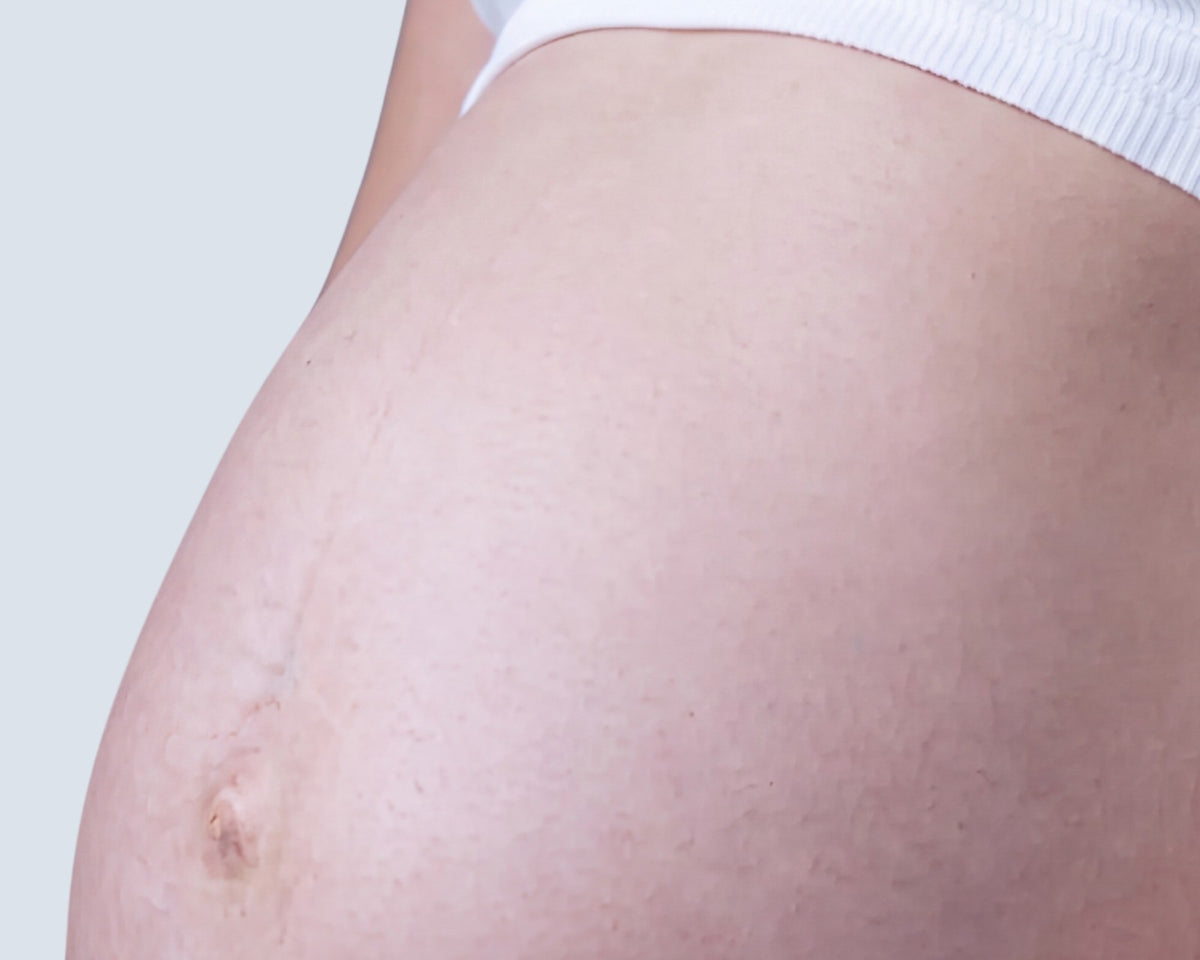
Pregnancy, breastfeeding, and postpartum shift the skin's normal functions: pigmentation rises, sensitivity increases, the barrier weakens, and hormonal acne can appear out of nowhere. These changes are natural.

The challenge is what's in the products meant to help. Skincare ingredients absorb through the skin, and the United States doesn't require safety testing before products are sold — so the filtering falls to you, usually while reading an ingredient label at 2 AM. Knowing which ingredients support skin health, and which to avoid, is essential for both safety and comfort.

  • Melasma & pigmentation

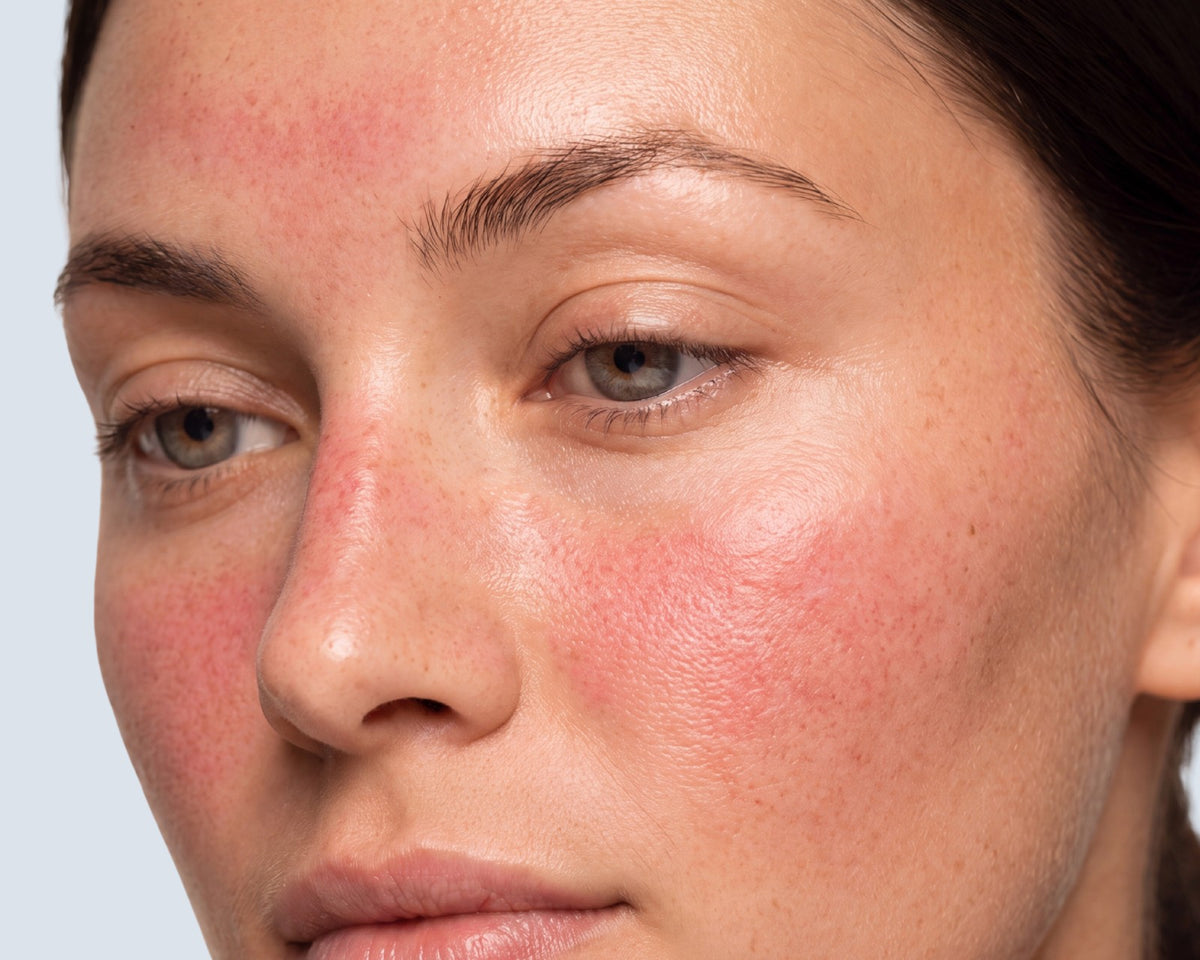
    Hormones stimulate pigment production, bringing darker patches across the face — the most visible pregnancy skin change.

  • Hormonal acne

    Shifting androgen levels can bring breakouts back — sometimes for the first time in years.

  • Heightened sensitivity

    Skin that tolerated everything becomes reactive; familiar products suddenly sting or flush.

  • Dryness & barrier strain

    Hormonal fluctuation impairs the moisture barrier, leaving skin tight, flaky, or both oily and dry at once.

  • Postpartum shifts

    Pigmentation and texture keep changing after delivery as hormones reset — the window extends well beyond birth.
02 · Ingredient safety

What to avoid while pregnant or nursing

These ingredient categories are the ones most consistently flagged for pregnancy and breastfeeding — used in mass-market products to extend shelf life, bleach pigmentation, or aggressively treat acne. Skin at Peace formulas contain none of them.

  • Retinoids

    Synthetic vitamin A derivatives. Oral forms cause fetal retinoid syndrome; avoiding topical forms is standard guidance.

  • Hydroquinone

    A pigment-lightening agent with 35–45% systemic absorption — among the highest of any common skincare active.

  • Parabens & phenols

    Endocrine-disrupting preservatives that interfere with hormone signaling; banned or restricted in much of Europe.

  • Phthalates

    Plasticizers linked in large prenatal studies to preterm birth and disrupted hormone levels.

  • Formaldehyde releasers

    Carcinogenic preservatives that appear on labels under many alternate names — careful reading required.

  • Chemical sunscreen filters

    Oxybenzone and related filters are detectable in the bloodstream after application. Mineral zinc oxide is the safe path.

03 · The Skin at Peace approach

Give your skin less to react to.

Your skin lives in a high-exposure environment. What surfaces as sensitivity, breakouts, or early change usually begins deeper — as low-grade inflammation. We reduce the disruption at the source: preservative-free formulas, micro-batched weekly by an MD and a microbiologist, built to support your barrier, not tax it.

  • Preservative-free
  • Made fresh weekly
  • MD-formulated
  • No endocrine disruptors

04 · The actives

What goes into the four formulas

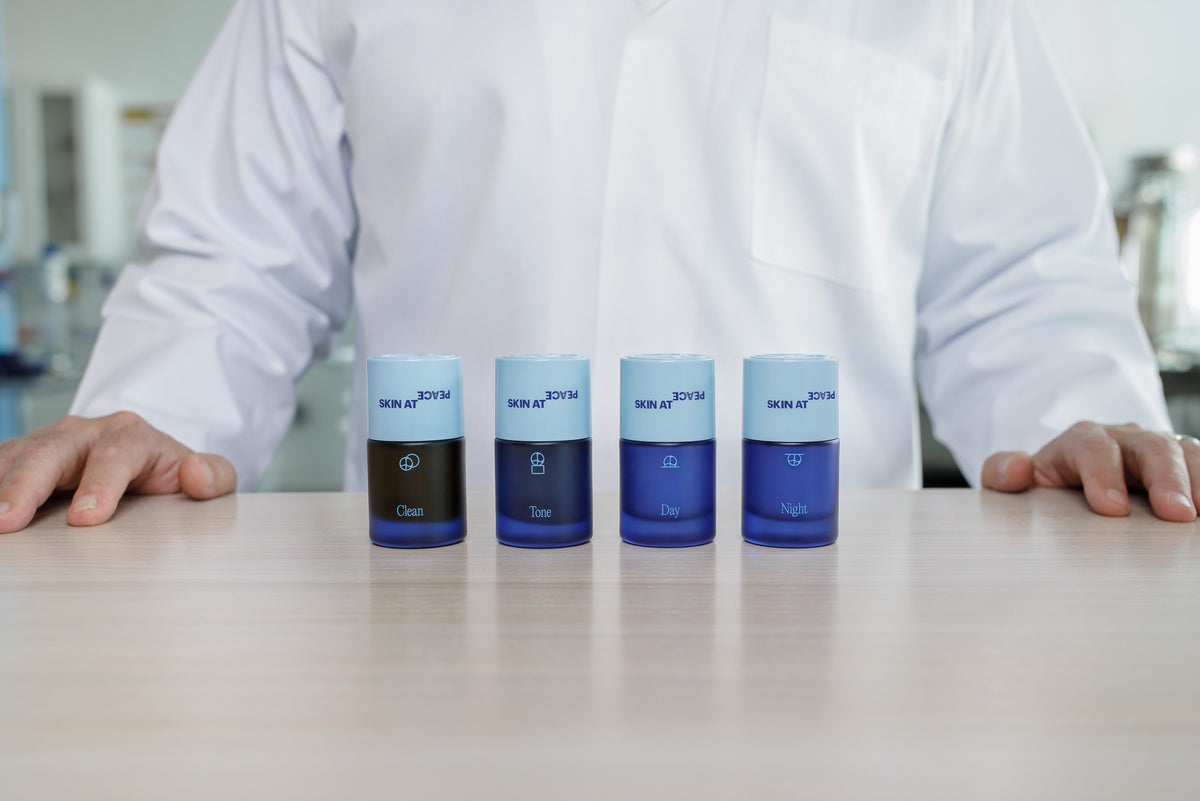
Every active is chosen to protect both you and baby — brightening, calming, and rebuilding, never stripping. All of it lives in the four formulas of the full system.

Gentle actives

  • Dual Vitamin C

    Dual Vitamin C

    Two forms of vitamin C brighten hormone-driven melasma and even skin tone — the pregnancy-safe answer where hydroquinone is off the table.

  • Niacinamide

    Niacinamide

    Calms the heightened reactivity of pregnancy while refining texture and softening dark patches.

  • Green Tea Extract

    Green Tea Extract

    Polyphenol antioxidants quiet inflammation on skin that suddenly overreacts.

  • Sea Buckthorn Oil

    Sea Buckthorn Oil

    Omega fatty acids support skin regeneration and healthy circulation through every trimester.

  • Vitamin E

    Vitamin E

    A protective antioxidant that shields a reactive barrier from everyday oxidative stress.

  • Mineral Zinc Oxide

    Mineral Zinc Oxide

    Safe, non-chemical UV defense — and since sun drives melasma, the first line against new pigmentation.

Barrier & hydration

05 · The protocol for pregnancy-safe skin

Start with the full system.

Preservative-free, micro-batched weekly, and free of every ingredient category flagged for pregnancy and nursing. The four formulas work together — the simplest, safest place to begin.

$165.00$99.0040% off first order

  • Made fresh weekly in small batches
  • Shipped direct to you the week it’s made
  • Sterile, sustainable dark glass
  • Free of every ingredient flagged in pregnancy & nursing
Start with the full system

07 · Questions

Pregnancy & postpartum questions

What expecting and new parents ask us most.

  • What skincare ingredients should I avoid during pregnancy?

    The categories most consistently flagged are retinoids (synthetic vitamin A), hydroquinone, salicylic acid, benzoyl peroxide, topical antibiotics, chemical sunscreen filters, formaldehyde and formaldehyde-releasing preservatives, phthalates, parabens, and phenols. They're used to extend shelf life, bleach pigmentation, or aggressively treat acne — and each carries risks ranging from irritation to potential developmental effects.

  • Is Skin at Peace safe during pregnancy and breastfeeding?

    Every formula is made without preservatives, endocrine disruptors, retinoids, or harsh synthetic actives — the categories flagged for pregnancy and nursing. Products are crafted weekly by an MD and a microbiologist with ingredient vetting aligned to global safety standards. As with any routine during pregnancy, review it with your OB or midwife.

  • What helps melasma during pregnancy?

    Daily mineral sun protection (zinc oxide) is the foundation — UV exposure drives pigment production. Gentle brightening support and barrier care help patches fade, and much pregnancy melasma softens naturally after hormones reset postpartum. What to skip: hydroquinone, the conventional melasma bleach, which has one of the highest absorption rates of any skincare active.

  • Why does preservative-free matter during pregnancy?

    Preservatives like parabens are endocrine disruptors — they interfere with the hormone signaling that pregnancy depends on. Most products need them because they sit in warehouses for months. Ours are made fresh weekly and delivered directly, so preservatives are simply unnecessary.

  • Can I keep using the routine postpartum and while nursing?

    Yes. The same ingredient standard applies through breastfeeding and beyond — nothing in the formulas is flagged for nursing. Postpartum skin keeps shifting as hormones reset, so a routine built for reactive, changing skin is exactly what that window calls for.

By step

Shop by step

Shop all products →
Clean

Clean

$35

Removes makeup and buildup without stripping the barrier.

Tone

Tone

$30

Refreshes and hydrates while balancing the skin's pH.

Day

Day

$45

Targets free-radical activity with antioxidant protection.

Night

Night

$55

Supports overnight repair without adding stress to the skin.